Are Single-Serve Coffee Makers Worth It?
For most solo drinkers, yes. A single-serve coffee maker cuts cleanup to zero, delivers a fresh cup in under a minute, and eliminates the stale-pot problem that kills a drip carafe by mid-morning. The tradeoff is real, though: K-Cup pods cost more per ounce than loose ground coffee, and if you brew heavily you will feel that difference on your grocery bill.

What Single-Serve Actually Means
A single-serve brewer heats water and pushes it through a K-Cup, loose-ground basket, or compatible pod to fill one cup at a time. There is no carafe, no thermal vessel to keep warm, and no leftover coffee sitting on a burner. Most models run at 1,000 to 1,500 watts, so they heat up fast. The Keurig K-Select, for example, draws 1,500 W and brews a cup in roughly a minute. Single-serve is a broad category that covers drip-style pod machines, compact espresso-style capsule brewers, and budget ground-coffee drip units, so the experience varies more than the name suggests.
The Real Cost of K-Cups vs. Ground Coffee
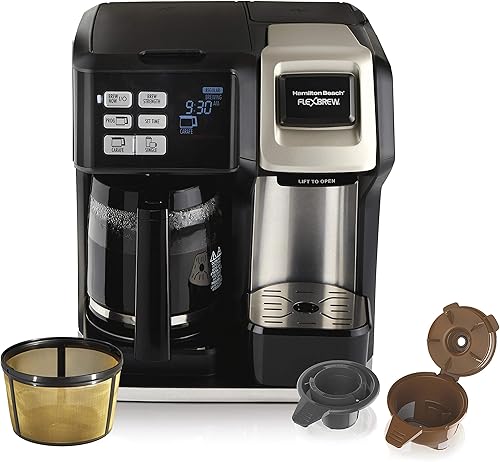
Pod convenience has a price. A box of K-Cups typically runs $0.50 to $0.90 per cup at retail; quality whole-bean or ground coffee brewed in a drip machine lands closer to $0.10 to $0.25 per cup. That gap adds up quickly if you drink two cups a day. On the other hand, single-serve cuts waste: no half-pot poured down the drain, no overbrewed carafe. For someone who brews one cup in the morning and moves on, the math often balances out. If you want to close the cost gap on a K-Cup machine, a reusable pod filter lets you fill with your own ground coffee, which is a feature the Hamilton Beach 49950C supports natively since it accepts both K-Cups and grounds.
Speed and Convenience: Where They Shine
The honest case for single-serve is simplicity. Drop in a K-Cup, press a button, and your cup is ready before you finish tying your shoes. There is no measuring, no waiting for a full drip cycle, and no cleaning a carafe. Compact models like the Keurig K-Mini Plus are only 4.5 inches wide, which matters in a small kitchen or dorm room. That footprint advantage, combined with fully automatic operation and button controls, is why these machines consistently outsell pour-over setups and French presses in the entry-level and mid-range segments.
Where Single-Serve Falls Short
Single-serve machines do not replace a real pour-over or French press for coffee quality. The brew temperature and contact time are fixed by the machine, so you cannot dial in extraction the way you can with a gooseneck kettle and manual pour-over. Most single-serve brewers also lack a thermal carafe, so there is no keeping a second cup warm without rebrewing. For households with two or more drinkers who want coffee at the same time, cycling through individual cups gets tedious. And descaling is a recurring chore: mineral buildup reduces heating efficiency and brew quality, so you need to run a descale cycle every few months depending on your water hardness.
Who Gets the Most Value
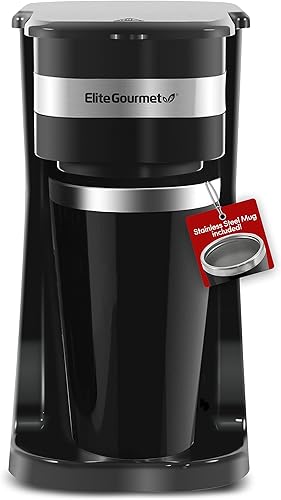
Single-serve brewers make the most sense for solo coffee drinkers, office workers with personal countertop space, and anyone who wants variety without committing to a full bag of one roast. They also work well as a secondary machine alongside a drip setup, handling the occasional afternoon cup without firing up a 12-cup carafe. Budget-conscious shoppers who drink ground coffee and do not need pod compatibility should consider a bare-bones drip single-serve like the Elite Gourmet EHC114, which runs under $20, uses paper filters, and is dishwasher safe, making it one of the most no-fuss options available.
What to Look for Before You Buy
Capacity matters even on single-serve: check whether the water reservoir holds enough for your morning routine without constant refilling. Wattage affects heat-up speed; models around 1,500 W brew noticeably faster than 700 to 800 W budget units. Pod compatibility is a lock-in decision, since K-Cup brewers use K-Cup pods and Nespresso Original-compatible machines use a different capsule system. If you want the flexibility to use ground coffee, verify that the machine accepts a reusable filter or a grounds basket. Finally, check whether the drip tray or carafe-style travel mug fits under the spout, since clearance varies widely between models.
Common mistakes to avoid
- Buying a pod-only machine without realizing you are locked into one pod format and its ongoing cost.
- Ignoring wattage when comparing budget models, then being surprised how slowly a 700 W machine heats up on a cold morning.
- Skipping descaling entirely, which lets mineral scale choke the heating element and ruins brew temperature over time.
- Choosing a machine with a tiny drip tray that cannot fit a standard travel mug, making it useless for the most common morning use case.
- Assuming all single-serve machines taste the same, when the actual cup quality varies significantly between drip-style pod brewers and espresso-style capsule machines.
- Not checking reservoir capacity before buying, then having to refill before every single brew.
Frequently asked questions
Are single-serve coffee makers more expensive to run than drip machines?
Usually yes, if you use disposable K-Cups. Pod coffee typically costs $0.50 to $0.90 per cup compared to $0.10 to $0.25 for ground coffee in a drip machine. A reusable pod filter narrows that gap significantly by letting you use your own grounds.
Can single-serve brewers make strong coffee?
They can, but your control is limited. Most K-Cup machines offer a strong brew setting that reduces water volume for a more concentrated cup. Espresso-style single-serve capsule machines produce a stronger, more concentrated shot by design. Standard drip-mode single-serve brewers tend to produce a medium-strength cup by default.
How often do I need to descale a single-serve machine?
Every one to three months depending on how hard your tap water is. Hard water leaves mineral deposits inside the heating element faster. Most machines alert you when descaling is due. Using filtered water slows buildup noticeably.
Do single-serve brewers work with reusable pods?
Many do. K-Cup-compatible machines often accept a reusable basket filter that you fill with ground coffee. Check the specific model before buying, since a few pod brewers are locked to proprietary disposable pods only.
Is a single-serve machine worth it for two people?
It depends on your morning routine. If you and your partner drink at different times or prefer different coffees, single-serve is genuinely convenient. If you both want coffee at the same moment every morning, a small drip machine with a carafe may be faster and cheaper overall.