How to Choose a Single-Serve Coffee Maker That Fits Your Morning
The right single-serve coffee maker comes down to three things: what goes into it (K-Cup pods, loose grounds, or both), how many cups you brew in a sitting, and how much counter space you can spare. Most home drip single-serve brewers run between 800 and 1,500 watts and brew directly into your mug, no carafe needed. Match those basics to your routine and you will sidestep most of the confusion.


Pod Type: K-Cup, Grounds, or Both
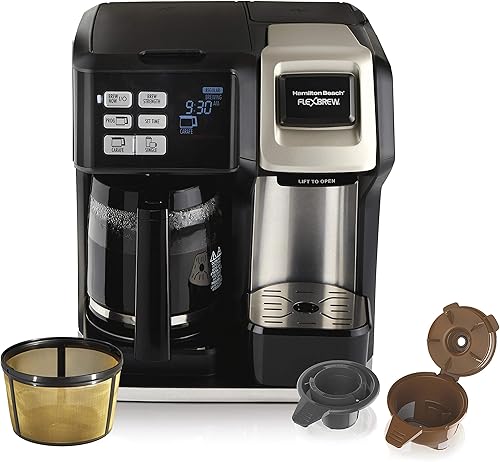
The biggest split in the single-serve world is between K-Cup machines and machines that brew loose ground coffee. K-Cup brewers like the Keurig K-Select are fully automatic drip machines that punch through a sealed K-Cup pod, convenient, consistent, and wide on flavor variety. Machines that take loose grounds, like the Elite Gourmet EHC114, use a paper filter and let you control grind and roast more precisely, which matters if you care about coffee quality. A third category accepts both: the Hamilton Beach 49950C takes either K-Cup pods or your own ground coffee using a reusable filter, so you get flexibility without buying two machines. If you are locked into one pod type, make sure the machine explicitly lists that compatibility before buying.
Brew Capacity and Water Reservoir Size
Single-serve brewers are designed around one cup at a time, but reservoir capacity varies a lot. A small reservoir means you refill it every brew, which slows down back-to-back cups. If two or three people share the machine in the morning, look for a reservoir large enough to handle a few cycles without a trip to the sink. The Keurig K-Select, for example, has a reservoir that supports multiple cups before refilling. Compact machines like the Keurig K-Mini Plus hold water for roughly one cup per fill, fine for a solo drinker, limiting for a household. Capacity in cups is the key spec to check, and it refers to the reservoir, not the brew size.
Wattage and How Fast It Brews
Wattage is a reliable proxy for how quickly a single-serve brewer heats water and delivers a cup. Most home machines land between 800 watts and 1,500 watts. The Keurig K-Select runs at 1,500 watts and brews a cup in under a minute once warmed up. Lower-wattage machines like the Hamilton Beach 49950C at 1,050 watts still brew quickly but may take a few extra seconds on the heat-up. If your mornings are rushed, lean toward higher wattage. For a bedside or office desk setup where speed matters less, a lighter 800-watt machine is fine and often draws less power.
Size and Footprint
Single-serve brewers range from genuinely compact to surprisingly bulky. The Keurig K-Mini Plus measures just 4.5 inches wide, which makes it a real fit for tight spots like a dorm shelf, an RV counter, or a small apartment kitchen. Mid-range machines like the Keurig K-Select and Hamilton Beach 49950C need about 9 to 12 inches of width and a similar depth. Before buying, check the listed dimensions against your actual counter space, especially ceiling clearance, since the lid must open upward to load a pod or reusable filter. Weight is worth noting too: a 7-pound machine stays put; a heavier one becomes a chore to move for cleaning.
Reusable Filters vs. Disposable Pods
Reusable filters and reusable K-Cup adapters let you brew your own ground coffee in a K-Cup machine, cutting down on plastic waste and pod cost over time. Many single-serve brewers come with a reusable filter in the box or sell one as an accessory. The Hamilton Beach 49950C includes a permanent gold-tone filter for ground coffee alongside K-Cup compatibility. Paper filters give a slightly cleaner cup with less sediment and work well in machines designed for grounds. If you go the reusable route, factor in the few extra seconds it takes to fill and rinse the filter after each brew, a minor tradeoff most people find worth it.
When to Think About Descaling
Mineral buildup from tap water is the most common reason single-serve brewers slow down or brew cooler than expected. Most machines have a descale indicator that tells you when scale has accumulated on the heating element. Descale kits are cheap and the process takes about 20 to 30 minutes. How often you need to descale depends on your water hardness, hard water areas may need it every one to two months. Buying a machine that has a clear descale alert and documented descale instructions makes this routine maintenance instead of a mystery. Check reviews specifically for descaling ease before committing to any model.
Common mistakes to avoid
- Choosing a machine based on brand name instead of checking which pod types it actually accepts
- Buying a compact single-serve brewer with a one-cup reservoir and being surprised you have to refill it for every cup
- Overlooking counter height clearance, the lid on most single-serve brewers swings upward and needs 15 or more inches above the machine
- Ignoring wattage when speed matters, a 800-watt machine brews fine but is noticeably slower than a 1,500-watt model on cold mornings
- Assuming all K-Cup machines accept reusable pods, some older models or budget versions do not support aftermarket reusable filters
- Skipping the descale step until the machine starts brewing weak or lukewarm coffee, at which point buildup is significant
Frequently asked questions
What is the difference between a K-Cup single-serve brewer and a regular drip coffee maker?
A K-Cup single-serve brewer brews one cup at a time directly into your mug using a sealed K-Cup pod, no carafe, no batch brewing. A standard drip coffee maker brews a full pot into a carafe and is better for multiple people. Single-serve machines trade batch capacity for speed and variety.
Can I use my own ground coffee in a K-Cup single-serve brewer?
Many K-Cup machines accept a reusable K-Cup adapter or come with a reusable filter, which lets you fill it with any ground coffee you choose. Some budget or older models do not support this, so check the specs before buying if that flexibility matters to you.
How much wattage do I need in a single-serve coffee maker?
Most home single-serve brewers run between 800 and 1,500 watts. Higher wattage means faster heat-up and quicker brews. If you are in a hurry most mornings, a 1,500-watt machine like the Keurig K-Select brews noticeably faster. Lower-wattage machines work fine but take a bit longer.
How often does a single-serve coffee maker need to be descaled?
Every one to three months is typical for average home use, though hard tap water may require descaling more frequently. Most machines have a light or alert that signals when it is time. Keeping up with descaling keeps your brew temperature steady and your machine running longer.
Is a compact single-serve brewer good for a household of two or three people?
It can work, but look at the water reservoir capacity. A machine like the Keurig K-Mini Plus holds water for roughly one cup at a time, which means frequent refills for multiple people. A machine with a larger reservoir handles back-to-back cups more smoothly for a small household.