Common Pour-Over Mistakes to Avoid (and How to Fix Them)
Small tweaks to grind, water, and technique can turn a flat pour-over into something you actually look forward to.
Pour-over coffee looks simple -- hot water, ground coffee, a filter. But the variables stack up fast, and small missteps add up to a cup that tastes flat, bitter, or sour. The good news is that most common pour-over mistakes share the same short list of root causes. Once you know what to watch for, fixing them is straightforward.


Using the Wrong Grind Size
Grind size is the single biggest variable in pour-over coffee. Too fine and the water moves too slowly, over-extracting the grounds and producing a harsh, bitter cup. Too coarse and the water rushes through before flavor has a chance to develop, leaving a weak, sour result. For most pour-over drippers, a medium-fine grind -- roughly the texture of coarse sand -- is a safe starting point. If your brew tastes bitter and takes longer than four minutes, go coarser. If it tastes sour and finishes under two minutes, go finer. A consistent burr grinder makes a bigger difference here than the dripper itself.
Skipping the Bloom
The bloom is a short 30-to-45 second pre-infusion step where you wet all the grounds with a small amount of hot water before your main pour. Fresh coffee releases carbon dioxide gas, and if you skip the bloom, that gas escapes during brewing, creating uneven extraction and a hollow, less complex flavor. To bloom properly, pour just enough water to saturate the grounds -- about twice the weight of the coffee you used -- then wait and watch the bed rise and fall before continuing. It takes less than a minute and noticeably improves clarity and sweetness in the cup.
Pouring Water Too Fast or Too Slow
The pace and pattern of your pour controls how evenly water contacts the coffee grounds. Dumping water in all at once floods the bed and pushes under-extracted water straight through. Pouring in one tiny trickle can cool the brew and stall extraction. A steady, circular motion that keeps water moving over the entire bed -- not just the center -- is what you are aiming for. Most home brewers find it easiest to pour in two or three controlled stages after the bloom, pausing briefly between each pour to let the bed drain slightly. This gives you more control without requiring a stopwatch.
Water That Is Too Hot or Too Cold
Near-boiling water from a freshly-heated kettle sits around 212 degrees Fahrenheit, which is hotter than ideal for most pour-over coffee. Water in that range pulls bitter compounds from the grounds faster than the desirable flavors. A range of about 195 to 205 degrees Fahrenheit works well for medium to light roast coffees. If you do not have a thermometer or a temperature-controlled kettle, letting just-boiled water sit for 30 seconds to a minute off the heat brings it into a workable range. Dark roasts can tolerate slightly cooler water without losing much.
Using a Dirty or Dry Filter
Paper filters should be rinsed with hot water before you add grounds. This removes a faint papery taste that the dry filter imparts to the coffee, and it pre-heats the dripper so your brew temperature stays stable from start to finish. This step takes ten seconds and is easy to skip when you are rushing, but the flavor difference is real, especially with delicate light roasts. Just pour hot water through the empty filter, discard that rinse water from your server or mug, and then add your grounds. Reusable metal filters do not carry a papery taste, but rinsing them still helps keep the dripper warm.
Ignoring the Coffee-to-Water Ratio
Eye-balling coffee and water is a common habit that produces inconsistent results from one brew to the next. A 1:15 ratio by weight -- one gram of coffee for every 15 grams of water -- is a reliable baseline for pour-over. That works out to about 30 grams of coffee for 450 grams of water, which fills a standard mug. A basic kitchen scale that measures in grams costs very little and removes most of the guesswork from your morning routine. Once you have a baseline you like, you can shift the ratio stronger or lighter without losing repeatability.
Choosing the Right Dripper Helps Too
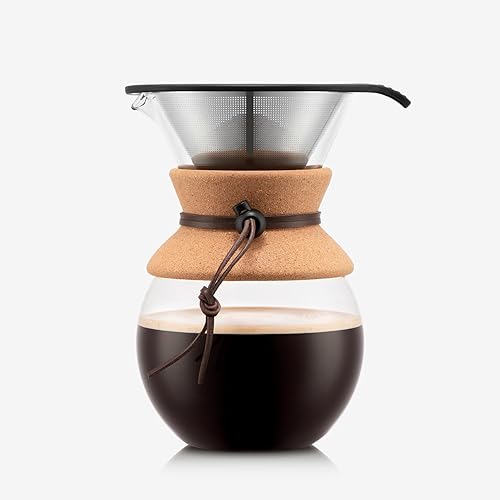
The dripper you use shapes how forgiving the brew process is. A ceramic dripper like the Hario V60-02W retains heat well and uses paper filters, which produce a clean, bright cup. A glass design like the Chemex CM-6A uses thick proprietary filters that slow the flow and produce an exceptionally clear, mild brew -- it is harder to over-extract with a Chemex even if your technique is slightly off. The Bodum 11571-109US uses a reusable mesh filter that lets more oils through, giving the cup a heavier body with a slightly different character. None of these is objectively better, but matching the dripper to your preferences reduces the number of adjustments you need to make.
Frequently asked questions
Why does my pour-over taste bitter?
Bitterness is almost always over-extraction. The most common causes are a grind that is too fine, water that is too hot, or a brew time that runs too long. Try going one step coarser on your grinder and see if the flavor improves before adjusting anything else.
Why does my pour-over taste sour or weak?
A sour or thin cup usually means under-extraction. The water moved through the grounds too fast, either because the grind was too coarse, the water was not hot enough, or the pour was rushed. Try a slightly finer grind or slow your pour rate.
Do I really need to bloom my coffee?
You do not need to, but it helps. Fresh coffee releases CO2 when it hits hot water, and that gas can disrupt even extraction if it escapes during the brew rather than before. Blooming lets the gas off before your main pour and tends to produce a more consistent, cleaner cup.
Does the type of filter affect the taste?
Yes, noticeably. Paper filters absorb oils and fine particles, producing a brighter, cleaner cup. Metal or reusable mesh filters let oils and some sediment pass through, giving the coffee a fuller body and a slightly different flavor profile. Neither is wrong -- it comes down to personal preference.
How long should a pour-over take from start to finish?
A typical single-cup pour-over takes two and a half to four minutes from the first pour to when the bed stops dripping. If it takes significantly less or more than that range, your grind size is the first thing to adjust.