Why Is My Coffee Maker Not Brewing? Common Causes and Fixes
A coffee maker that stops mid-cycle or refuses to start is usually fixable in minutes once you know where to look.
You hit the brew button, nothing happens, and now you're stuck waiting for coffee that isn't coming. Before you assume the machine is dead, know that the vast majority of no-brew problems come down to a handful of simple issues. Most can be resolved without any tools and without calling customer support. This guide walks you through the most likely culprits in order, from the obvious to the overlooked.
Check the Basics First
It sounds obvious, but start with power. Make sure the machine is plugged in firmly, the outlet is live (test it with another device), and the power switch is actually in the on position. Some drip makers have a separate brew button that must be pressed after the power is on. If your model has a programmable timer, check that it wasn't accidentally set to a delayed start time.
The Water Reservoir Is Empty or Not Seated
A coffee maker with no water simply will not run. Fill the reservoir to at least the minimum line marked on the side. On machines with a removable tank, push it firmly back into the body until it clicks or seats flush. A tank that's even slightly misaligned can break the seal the machine needs to draw water into the heating element. Remove it and re-seat it if you're in doubt.
A Clogged or Blocked Water Line
Mineral scale from hard tap water is one of the top reasons a coffee maker stops brewing over time. Calcium and magnesium deposits narrow the internal tubing until water can't flow through at all. If your machine is gurgling, struggling, or only dripping a tiny amount, scale buildup is the likely culprit. Running a descaling cycle with a mix of equal parts white vinegar and water, then flushing with two full reservoirs of plain water, clears most blockages. Aim to descale every one to three months depending on how hard your water is.
The Filter Basket Is Overfilled or Incorrectly Seated
If the filter basket is packed too full with grounds, it can overflow and jam the brew path, causing the machine to pause or stop entirely. Use the amount of coffee the machine recommends, usually one to two tablespoons per six ounces of water. Also check that the basket is sitting squarely in its slot. A tilted or partially inserted basket blocks water flow and can trigger an auto-shutoff on machines that sense backpressure.
A Tripped Thermal Cutoff
Most coffee makers include a thermal cutoff fuse, a safety device that shuts the machine down if it overheats. This can happen after a dry run (heating with no water) or after long hours of continuous use. In some cases the machine just needs to cool down completely, which takes about 30 minutes, before it will start again. If the machine won't turn on at all after cooling, the fuse may have blown permanently and will need professional repair or replacement.
Lid or Carafe Not Fully Closed
Many drip coffee makers have a lid sensor on the water reservoir or a carafe switch on the warming plate. If the lid isn't snapped shut or the carafe isn't pushed all the way onto the plate, the machine interprets this as an unsafe condition and won't start the brew cycle. Give both a firm push and listen for a click. On machines with a thermal carafe, make sure the carafe's lid is sealed before placing it back on the base.
When to Consider Replacing Your Machine
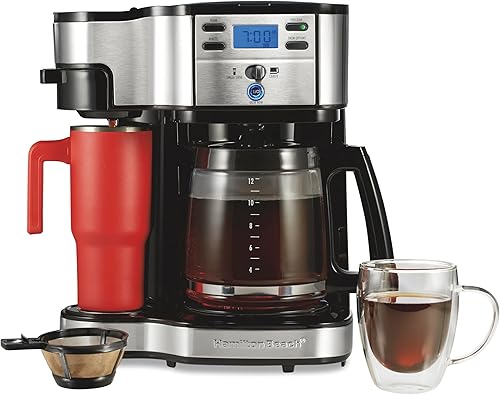
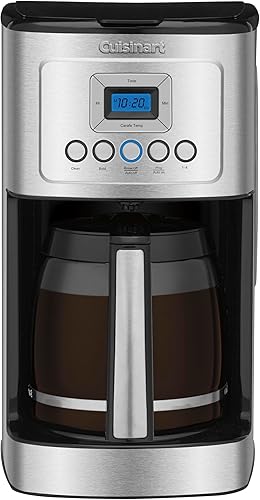
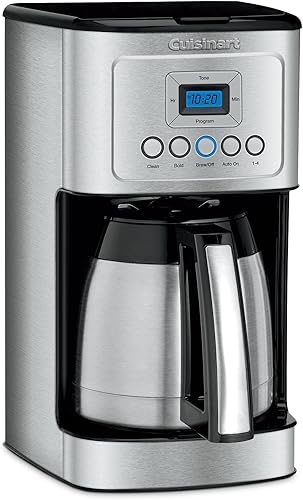
If you've worked through every step above and the machine still won't brew, the problem is likely an internal component like the pump, heating element, or control board. Repair costs for consumer coffee makers often exceed the price of a new machine, especially for models under $100. A well-regarded drip maker like the Hamilton Beach 49980R (4.5 stars, over 53,000 reviews) or the Cuisinart DCC-3200 (4.5 stars, over 43,000 reviews) can be had for under $90 and will come with a fresh manufacturer warranty. If you want a 12-cup model with a thermal carafe, the Cuisinart DCC-3400NAS is another popular option with solid reviews at a similar price point.
Frequently asked questions
Why does my coffee maker turn on but not brew?
The most common reasons are a clogged water line from scale buildup, a misaligned or overfull filter basket, a reservoir that isn't fully seated, or a closed-lid sensor that isn't detecting the lid as locked. Work through each one and descale the machine if it's been more than a few months.
Can I fix a coffee maker that stopped brewing after a dry run?
Possibly. Running the machine without water can trip the thermal cutoff fuse. Let the machine cool completely for at least 30 minutes, then try again. If it still won't start, the fuse may have blown and the machine may need professional service.
How do I know if my coffee maker needs descaling?
Signs include a longer-than-usual brew time, gurgling or sputtering sounds, only partial amounts of coffee coming out, or coffee that tastes off despite fresh grounds. Most machines with a mineral buildup issue respond well to a single descaling cycle.
How often should I descale my drip coffee maker?
Every one to three months is a reasonable target for daily use. If your tap water is especially hard, lean toward monthly. If you use filtered water, quarterly is usually sufficient.
Is it worth repairing a coffee maker that won't brew?
For most consumer-grade drip machines, no. Repair labor plus parts often costs more than a comparable new machine that comes with a warranty. If the fix is a simple descaling or a loose part, do it yourself. If it needs an internal component replaced, compare repair quotes against the cost of a new machine first.