How to Clean a Coffee Maker (The Right Way)
A simple routine keeps mineral buildup and coffee oils from ruining your brew.
Most coffee makers see daily use but rarely get a proper cleaning, and the result shows up in the cup, stale, flat, or slightly bitter coffee. Coffee oils go rancid over time, and hard water leaves mineral deposits inside the heating element and water lines that slow brewing and reduce heat. A three-level cleaning routine (daily, weekly, monthly) takes only a few minutes each time and makes a noticeable difference in taste. This guide walks through each step so you know exactly what to do and how often.

Why Cleaning Your Coffee Maker Actually Matters
Coffee is loaded with natural oils, and every brew cycle leaves a thin residue inside the brew basket, filter holder, and carafe. Over days and weeks, that residue turns rancid and gives coffee a bitter, almost musty edge. Separately, tap water carries dissolved minerals, mainly calcium and magnesium, that slowly coat the inside of the water reservoir, heating element, and spray head. Heavy scale buildup forces the heating element to work harder, which can shorten the machine's life and cause brewing to slow down or stop entirely. Keeping up with regular cleaning prevents both problems before they get bad enough to taste.
What You Need Before You Start
You likely have everything already. For daily and weekly cleaning, all you need is dish soap, warm water, and a soft cloth or sponge. For monthly descaling, white distilled vinegar is the classic choice, it's inexpensive, food-safe, and effective on mineral deposits. Some manufacturers sell branded descaling solutions if you prefer to skip the vinegar smell, though plain vinegar works well for most home machines. A small bottle brush is handy for reaching inside carafes and narrow water reservoirs. Avoid abrasive scrubbers that can scratch glass or plastic parts.
Daily Quick Clean
After your last cup of the day, dump any leftover coffee from the carafe and rinse it with warm water. Remove the brew basket and any used paper filter, then rinse the basket under the tap. Leave the lid off the water reservoir overnight so air can circulate, a closed, damp reservoir is a good environment for mold. This whole routine takes under two minutes and prevents most buildup from taking hold in the first place. If you skip this daily step for several days in a row, you'll start to notice stale flavors even in freshly brewed coffee.
Weekly Deep Clean
Once a week, wash the carafe, lid, brew basket, and reusable filter (if you have one) with warm soapy water. Many of these parts are labeled dishwasher-safe, check your machine's manual to confirm. The outside of the machine and the warming plate under the carafe collect drips and dried coffee; wipe them down with a damp cloth. Pay special attention to the spray head (the small disc above the brew basket that distributes hot water over the grounds), coffee residue clogs those tiny holes and leads to uneven extraction. If your spray head is removable, rinse it under running water and use a toothpick or soft brush to clear any clogged holes.
Monthly Descaling With Vinegar
Fill the water reservoir with a mixture of equal parts white distilled vinegar and water, so if your reservoir holds 12 cups, use 6 cups of vinegar and 6 cups of water. Place a paper filter in the basket (or leave it empty if your machine uses a permanent filter) and run a full brew cycle. Halfway through, pause the machine and let the vinegar solution sit inside for 20 to 30 minutes, this gives the acid time to dissolve mineral deposits. Then let the cycle finish. Run two or three full cycles with plain fresh water after that to flush out all the vinegar before brewing coffee again. You'll know you're done when you can no longer smell or taste vinegar in the water that comes out.
How Often Should You Descale?
Monthly descaling is a good default, but the right frequency depends on how hard your tap water is. If you live in an area with very hard water, common in the Midwest and Southwest, descaling every two to three weeks makes sense. If you use filtered or softened water, you can stretch to every six to eight weeks. A simple sign that you're overdue: brewing takes noticeably longer than usual, or the machine starts sputtering and producing less coffee than you put water in for. Some machines have a descale indicator light that tells you when it's time.
Recommended Coffee Makers That Are Easy to Clean
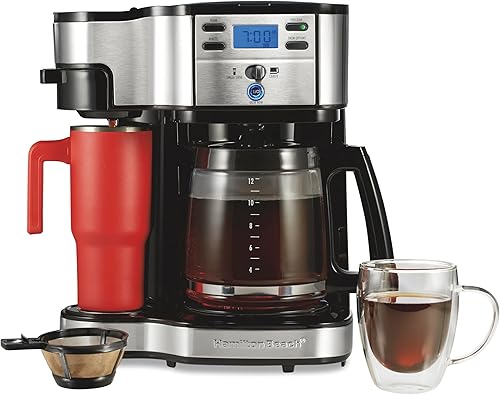
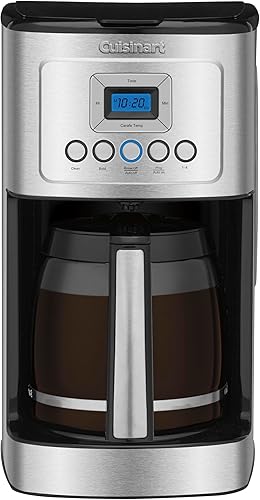
If you're shopping for a machine that's straightforward to maintain, the Hamilton Beach 49980R and Cuisinart DCC-3200 are two popular drip machines with removable brew baskets and easy-access water reservoirs that simplify the weekly cleaning process. The Bunn CSB3T-B is another well-regarded drip machine with a 10-cup capacity and stainless steel finish that wipes clean without much fuss. All three use standard paper or reusable filters and have the kind of straightforward designs that make regular upkeep quick.
Frequently asked questions
Can I use apple cider vinegar instead of white vinegar to descale?
White distilled vinegar is the better choice because it's clear and has a consistent acidity. Apple cider vinegar works in a pinch but leaves behind a stronger smell and can be harder to rinse out fully.
How do I know if my coffee maker needs descaling?
The most common signs are slower brewing, less coffee output than the water you added, or a gurgling or sputtering sound during the brew cycle. Some machines also have a descale indicator light.
Is it safe to run straight vinegar without diluting it?
Straight vinegar is more acidic than necessary and can be harder to rinse out completely, which means you risk vinegar-flavored coffee afterward. A 50/50 vinegar-and-water mix is effective for most home machines without the extra rinse trouble.
How do I clean the spray head on my coffee maker?
If the spray head is removable, unscrew or pop it off (check your manual), then rinse it under running water and use a toothpick or soft brush to clear any clogged holes. If it's fixed in place, run a vinegar descale cycle, that usually dissolves the buildup on its own.
Can I put my carafe in the dishwasher?
Many glass and stainless steel carafes are dishwasher-safe, but always check your machine's manual first. If the carafe has a lid with rubber seals, those parts often do better with hand-washing to avoid warping or degrading over time.