How Much Coffee Per Cup? Getting the Ratio Right
One simple ratio solves most home-brewing problems before they start.
If your coffee is coming out too weak, too bitter, or just off, the first thing to look at is your coffee-to-water ratio. Most people either eyeball it or follow a vague "one scoop per cup" rule that leads to wildly different results depending on the scoop and the mug. The good news is there is a clear starting point that works for most drip coffee makers, and you can fine-tune from there in about 30 seconds.

The Standard Ratio: 1 to 2 Tablespoons per 6 Ounces
The Specialty Coffee Association recommends using roughly 1 to 2 tablespoons of ground coffee for every 6 ounces of water. That works out to about 10 grams of coffee per 6 oz, if you prefer weighing. Most people land closer to 1.5 tablespoons and find that sweet spot perfectly drinkable without adjusting anything else. Keep in mind that a "cup" on most coffee maker carafes means 5 or 6 ounces, not the 8-ounce mug you actually drink from, so your machine may be making more coffee than the markings suggest. Always check your specific carafe to understand what its cup lines actually represent.
Why "One Scoop Per Cup" Goes Wrong
Coffee scoops are not standardized the way measuring spoons are. A generic plastic scoop from a coffee tin holds somewhere between 1 and 3 tablespoons depending on the brand, which means two people following the same "one scoop" instruction can end up with completely different results. On top of that, the "cups" marked on your coffee maker carafe are almost certainly 5 or 6 ounces each, while your mug is probably 8 to 12 ounces. Once you add in the fact that finely ground coffee packs more tightly than coarse ground, you can see why vague instructions cause so much confusion. Switching to a measuring tablespoon removes all of that guesswork.
Adjusting for Taste: Stronger or Milder
Start at 1.5 tablespoons per 6 ounces of water, brew a pot, and taste it. If it tastes weak or watery, add half a tablespoon on your next brew. If it tastes bitter or harsh, reduce by half a tablespoon. Do not try to fix bitterness by adding less coffee and then brewing longer, because that usually makes things worse by over-extracting the grounds. Small, single-variable adjustments are the fastest way to dial in a ratio you like and actually remember.
Does Coffee Maker Size Change the Ratio?
No, the ratio stays the same regardless of whether you are making 4 cups or 12 cups. You simply multiply up. For a 12-cup pot where each cup equals 6 ounces, that is 72 ounces of water total, and you would use between 12 and 24 tablespoons of coffee depending on your preference, with 18 tablespoons being a reasonable starting point. The biggest mistake people make with large pots is scaling the coffee linearly from a small-batch recipe but forgetting that their big pot's cup lines are also in 5-oz increments, not 8-oz increments.
Weighing vs. Measuring by Volume
If you want a truly repeatable cup, a kitchen scale beats tablespoons every time. Ground coffee can vary significantly in density depending on grind size and the specific bean. A tablespoon of espresso-fine grounds will weigh noticeably more than a tablespoon of coarsely ground coffee. The standard weight-based ratio is approximately 1 gram of coffee per 15 to 17 grams of water, with 1:15 giving a stronger brew and 1:17 giving a milder one. You do not need to buy a fancy scale; any inexpensive kitchen scale that reads in grams will do the job.
A Few Things That Affect How Strong Your Coffee Tastes
The ratio is the biggest lever, but it is not the only one. Water temperature matters: most drip makers brew around 195 to 205 degrees Fahrenheit, which is ideal, but cheaper machines can fall short of that and produce a weaker, flatter cup. Grind size plays a role too, since coarser grinds extract more slowly and often taste milder even at the same ratio. Coffee freshness is another factor, because stale coffee produces a thin, flat brew no matter how much of it you use. If you have nailed the ratio and the coffee still seems weak, these other variables are worth checking.
What to Look for in a Coffee Maker That Helps You Brew Consistently
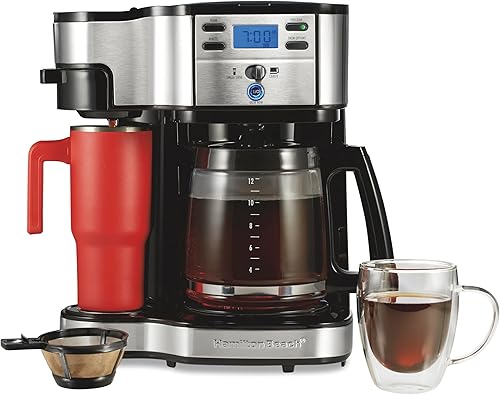
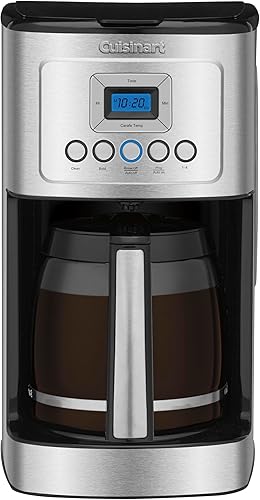
A good drip coffee maker with clearly marked water and carafe lines makes hitting your target ratio much easier. The Hamilton Beach 49980R is a highly rated drip machine with straightforward controls that takes the guesswork out of the process. The Cuisinart DCC-3200 is another well-regarded option with a 14-cup glass carafe and programmable settings that suit people who brew the same amount every day. If you are on a tighter budget and want something simple and compact, the Proctor Silex 48351PS is a no-frills drip maker that handles the basics reliably. Any of these machines will brew consistently as long as you are measuring your coffee accurately.
Frequently asked questions
How many tablespoons of coffee do I use for a 12-cup pot?
For a 12-cup pot where each cup is 6 ounces, use between 12 and 24 tablespoons of ground coffee. A good starting point is about 18 tablespoons, which lands in the middle of the recommended range. Adjust up or down based on how strong you like your coffee.
Is a coffee scoop the same as a tablespoon?
Not always. A standard coffee scoop is often equal to 2 tablespoons, but this varies by brand and product. Check the labeling on your scoop, or just use a regular measuring tablespoon to be sure.
Why does my coffee taste weak even when I follow the ratio?
A few things can cause weak coffee even with the right ratio. Stale beans lose flavor and produce a flat brew. A grind that is too coarse under-extracts the coffee. Some budget coffee makers also brew at temperatures below the ideal 195 to 205 degree range, which limits extraction. Try fresher coffee or a slightly finer grind first.
Does the type of coffee maker change how much coffee I should use?
The baseline ratio is the same across most brew methods, but the grind size and brew time vary. Drip coffee makers, pour-over setups, and French presses all work well with roughly 1 to 2 tablespoons per 6 ounces, though the grind coarseness differs for each. Espresso uses a much finer grind and far more coffee per ounce of output.
Can I use the same ratio for decaf coffee?
Yes. The ratio works the same way for decaf. Decaffeinated coffee sometimes tastes slightly milder than a comparable regular coffee because the decaffeination process can affect flavor compounds, so some people add an extra half tablespoon, but the standard ratio is still the right place to start.