How Much Does It Cost to Run a Coffee Maker?
Spoiler: it's probably less than you think, but the math is still worth knowing.
Your coffee maker runs every morning, but how much is that actually adding to your electricity bill? For most drip machines, the cost per brew cycle is just a few cents, but brewing habits and wattage can push that number up over a month. Understanding what drives the cost helps you make smarter choices whether you're comparing machines or just curious about your energy use. This guide walks through the math and explains which factors matter most.

What Wattage Does a Coffee Maker Use?
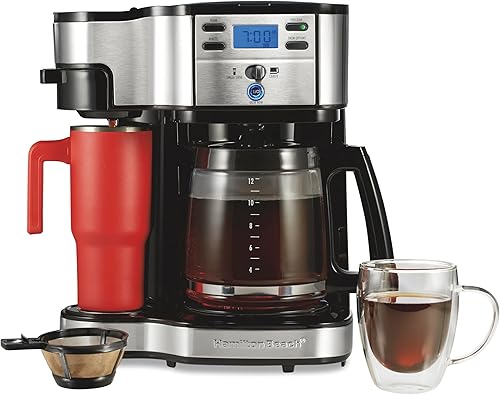
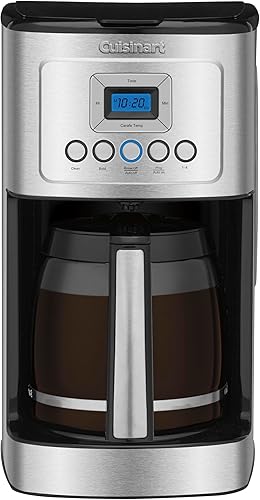
Most standard drip coffee makers fall somewhere between 600 and 1,200 watts during the brewing cycle. Budget and compact machines tend to land on the lower end, while full-size programmable models with warming plates can push closer to 1,000 to 1,100 watts. The wattage rating on the label is the peak draw during brewing, not a constant figure. Once brewing finishes and the machine switches to keep-warm mode, power use drops significantly, often to 40 to 60 watts. That warming plate is often the sneakiest part of the energy bill because people leave it on for hours.
The Simple Formula to Calculate Your Cost
The formula is straightforward: (watts / 1,000) x hours of use x your electricity rate in dollars per kWh. The national average electricity rate in the U.S. sits around $0.16 per kWh, though it varies by state. So a 1,000-watt coffee maker running for 10 minutes of active brewing uses about 0.17 kWh, which costs roughly $0.03. If you also leave the warming plate on for 30 minutes at 50 watts, that adds less than a penny. Run the numbers for your machine and you'll likely find the daily cost is under $0.10 for a typical household.
Monthly and Annual Cost Estimates
At $0.05 per day for a moderate-use household, you're looking at around $1.50 per month, or about $18 per year just for brewing. If you have a higher-wattage machine that you also leave warming for an hour each morning, that could climb to $3 to $5 per month. For comparison, the coffee itself costs far more than the electricity. Still, over a decade of daily use, a machine running 1,100 watts versus one running 800 watts could mean a difference of $30 or more just in electricity.
Does the Type of Coffee Maker Change the Cost?
Yes, different types of machines have very different energy profiles. A basic single-serve brewer heats only the water it needs and turns off automatically, so it's often more efficient per cup than a full carafe machine running its warming plate. Pour-over coffee makers are manual and use no electricity at all. Espresso machines can spike to 1,000 watts or more during the heating phase, but the brew time is short, so total energy use per shot is modest. If you're making a full 10- to 12-cup pot once a day, a standard drip machine with auto-shutoff is usually the most cost-effective setup for a household.
The Warming Plate Is Where the Waste Happens
Leaving the warming plate on is the biggest energy drain most people overlook. A warming plate drawing 50 watts for two hours adds up to 0.1 kWh per session, which isn't huge but compounds over months. Machines with an auto-shutoff timer cut this automatically, usually after one or two hours. If your machine doesn't have one, get in the habit of switching it off once you've poured your last cup. A thermal carafe is another solid solution since it keeps coffee hot without any electricity at all.
Tips to Lower Your Coffee Maker's Running Cost
Use the auto-shutoff feature if your machine has one, or manually switch it off right after brewing. A thermal carafe keeps coffee hot for hours without the plate running. Brewing the right amount rather than making a full pot when you only want two cups cuts both electricity and waste. Look for machines with lower wattage that still hit the 195 to 205 degree Fahrenheit brew temperature, since that's what actually matters for good coffee. Finally, unplugging the machine entirely when it's not in use eliminates any standby draw, which is usually small but present on programmable models.
How to Find the Wattage of Your Coffee Maker
Check the label on the bottom or back of the machine. It will list the rated watts, sometimes alongside voltage and current (amps). If you only see amps and volts, multiply them together to get watts. For example, 8.5 amps at 120 volts equals 1,020 watts. You can also use a plug-in energy monitor to measure real-world draw in both brew and warm mode, which gives you more precise numbers for the formula above.
Frequently asked questions
How many watts does the average coffee maker use?
Most standard drip coffee makers use between 800 and 1,100 watts during the brewing cycle. The exact number depends on the model; it's printed on the label underneath or on the back of the machine.
Does leaving a coffee maker on all day use a lot of electricity?
It adds up more than most people expect. A warming plate running at 50 watts for eight hours uses 0.4 kWh, which costs around $0.06 at the national average rate. Over a month that's nearly $2 just for the warming plate, with no additional coffee brewed.
Is it cheaper to use a single-serve brewer or a drip coffee maker?
Per cup of electricity, they're close. Single-serve brewers heat only the water for one cup and shut off automatically, which limits waste. Drip machines are more efficient per cup if you're making a full carafe, but the warming plate can offset that. The bigger cost difference is in the coffee itself since pods cost more per cup than ground coffee.
Does a programmable coffee maker use electricity when it's off?
Programmable machines with clocks and displays draw a small amount of standby power, typically 1 to 5 watts, even when they're not brewing. Over a year that's a negligible amount, but unplugging entirely eliminates it.
What's the most energy-efficient way to make coffee?
A manual method like pour-over or French press uses no electricity at all, requiring only hot water from a kettle. Among electric machines, a single-serve brewer with auto-shutoff or a drip machine with a thermal carafe and auto-shutoff are the most efficient options.