How to Make Pour-Over Coffee at Home
Pour-over coffee is brewed by slowly pouring hot water over loose grounds held in a dripper fitted with a paper or reusable filter, letting gravity pull the liquid into a carafe or mug below. The whole process takes about four to five minutes and gives you more control over flavor than a drip machine, no K-Cup required, just fresh grounds, a gooseneck kettle, and a little patience.


What You Need Before You Start
At minimum you need a pour-over dripper, a filter that fits it, a way to boil water, and fresh ground coffee. A gooseneck kettle is strongly recommended because its narrow spout lets you pour in slow, controlled circles rather than dumping water in all at once. If you want to brew more than one or two cups at a time, look for a dripper that sits over a carafe, the Chemex CM-6A ($47.95, 4.8 stars, borosilicate glass) is a popular single-piece option where the carafe and dripper are the same vessel. The Hario V60-02W ($29, 4.8 stars, ceramic, dishwasher safe) is a 4-cup dripper that perches over any mug or carafe you already own. A kitchen scale helps you nail a consistent coffee-to-water ratio, though you can use tablespoons in a pinch.
Grind Size and Coffee Ratio
Pour-over calls for a medium to medium-fine grind, coarser than espresso, finer than French press. A blade grinder will work, but a burr grinder produces more even particles that brew evenly and taste cleaner. For the ratio, a reliable starting point is 1 gram of coffee per 15 to 16 grams of water; for a single 12-ounce cup that means about 22 grams of coffee and 340 grams of water. If you don't have a scale, aim for roughly one heaping tablespoon per six ounces of water, then adjust to taste. Grind fresh right before brewing for the best flavor, pre-ground coffee works but goes stale fast.
Water Temperature
The right water temperature for pour-over is between 195 and 205 degrees Fahrenheit, which is just off a full boil. If you don't have a thermometer, bring the water to a boil and let it sit off heat for about 30 to 45 seconds. Water that is too cool under-extracts the grounds, leaving the cup flat and slightly sour. Water that is too hot can push bitterness out of the grounds faster than you want. Using a gooseneck kettle with a built-in temperature hold makes this easy to repeat every morning without any guesswork.
The Bloom Pour
Before your main pour, do a bloom: wet all the grounds with about twice their weight in water (roughly 40 to 45 grams for a 22-gram dose) and wait 30 seconds. During this time you will see the grounds puff up and release carbon dioxide, this is fresh coffee degassing. Skipping the bloom means that CO2 can create uneven channeling during the main pour and leave a thin, slightly sour taste in the cup. The bloom only takes 30 seconds and is worth doing every time.
The Main Pour
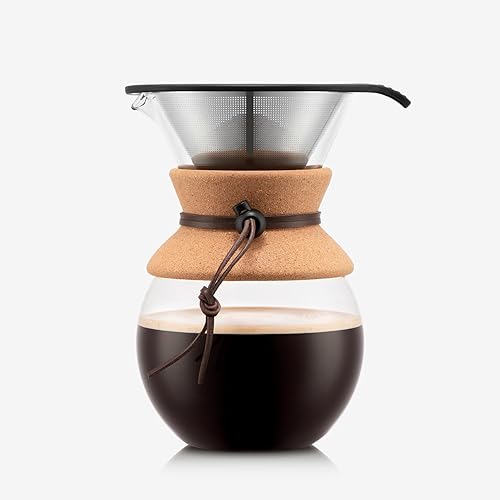
After the bloom, pour the remaining water in slow, steady spirals starting from the center and moving outward, keeping the water level in the dripper roughly consistent rather than letting it drain completely between pours. The full brew should take between three and four minutes from start to finish; if it goes significantly faster the grind is too coarse, and if it takes much longer the grind is too fine or the filter is clogged. The Bodum 11571-109US ($19.99, 4.5 stars, borosilicate glass, reusable filter) is a budget-friendly option that drains at a moderate rate, making it forgiving for beginners learning pour pace. Pouring in two or three stages, rather than one continuous stream, is also acceptable and gives you more time to keep an eye on the drain rate.
Cleaning and Maintenance
After each brew, discard the paper filter and spent grounds, then rinse the dripper with hot water. Most ceramic and some glass drippers are dishwasher safe, check the specs for your specific model before tossing it in. Reusable metal or mesh filters should be rinsed immediately after use so coffee oils do not build up and turn rancid. If you use a glass carafe, rinse it while it is still warm to prevent coffee staining. You do not need to descale a manual pour-over dripper the way you would an electric drip machine, but if you live in a hard-water area you may notice mineral deposits on the glass over time, a short soak in a diluted white vinegar solution clears them easily.
Common mistakes to avoid
- Skipping the bloom pour, which traps CO2 in the grounds and leads to uneven extraction and a flat cup.
- Using water that is too hot (a full rolling boil poured directly) or too cool (below 190 degrees), both of which throw off extraction.
- Grinding too coarse for the dripper, causing the water to rush through in under two minutes and leaving the brew thin and under-extracted.
- Pouring too fast or dumping all the water in at once instead of pouring in slow, controlled spirals.
- Using a regular kettle with a wide spout, which makes it hard to control flow rate and aim, a gooseneck kettle solves this immediately.
- Not pre-wetting the paper filter before adding grounds, which can leave a papery taste in the cup and cause the filter to collapse during the pour.
Frequently asked questions
Do I need a gooseneck kettle for pour-over coffee?
You do not strictly need one, but a gooseneck kettle makes a real difference. Its narrow spout lets you pour in slow circles and keep a steady flow rate, which is hard to replicate with a standard kettle. If you are just starting out, a regular kettle works, pour slowly and carefully, but a gooseneck is the single upgrade most people notice right away.
How long should a pour-over take from start to finish?
A typical pour-over brew takes three to four minutes of total contact time, not counting the 30-second bloom. If the full brew wraps up in under two and a half minutes, grind finer. If it drags past five minutes, grind coarser or check that your filter is not sitting too flat against the dripper walls and blocking flow.
Can I use pre-ground coffee for pour-over?
Yes, pre-ground coffee works fine. Look for a bag labeled medium grind. The main tradeoff is staleness, ground coffee loses flavor noticeably within a week or two of opening, while whole beans stay fresh much longer. If convenience matters more than peak flavor, pre-ground is a perfectly reasonable choice.
What is the difference between a pour-over and a drip coffee maker?
A drip coffee maker automates the water temperature and pour rate for you, which is convenient but leaves you little control over the brew. A pour-over is fully manual, you control how fast the water goes in, where it hits the grounds, and whether you do a proper bloom. The manual process typically produces a cleaner, more nuanced cup, especially with quality beans, and the equipment costs far less than most drip machines.
Paper filter or reusable filter, which is better for pour-over?
Paper filters absorb most of the coffee's natural oils, producing a clean, bright cup with less sediment. Reusable metal or mesh filters let those oils through, giving the brew a slightly fuller, richer body similar to a French press. Neither is objectively better, it comes down to personal taste. Paper filters are also easier to clean up since you just toss them with the grounds.