Programmable vs Manual Coffee Maker: Which One Should You Buy?
Programmable coffee makers handle the entire drip cycle automatically and let you schedule a brew in advance, while manual machines require you to start the water yourself and often give you more hands-on control over the process. For most households that want reliable, low-effort coffee every morning, a fully automatic drip machine with a programmable timer is the practical choice. Manual brewers, including pour over setups and French press styles, appeal to people who enjoy the ritual and want to dial in water temperature, bloom time, and pour rate.

What 'Programmable' Actually Means on a Coffee Maker
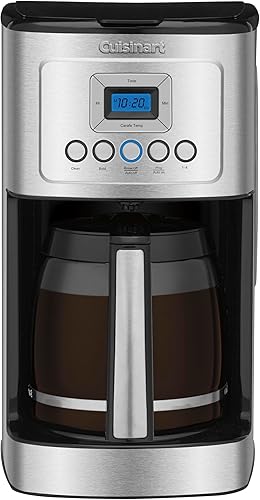
A programmable coffee maker lets you set a brew time in advance so the machine starts on its own. Most fully automatic drip machines include a 24-hour clock and a delay-brew function, so you load the grounds the night before and wake up to a full carafe. Beyond scheduling, many programmable models offer controls for brew strength, auto-shutoff timing, and keep-warm temperature. The Cuisinart DCC-3200, a 12-cup drip machine with 1,100 watts and over 43,000 reviews at a 4.5-star rating, is a popular example of this category. What you give up is granular control: the machine decides the water temperature and pour rate.
What 'Manual' Means in Practice
A manual coffee maker puts you in charge of starting the brew cycle or pouring the water yourself. This covers a wide range of styles, from basic drip machines with a single on/off button to pour over setups where you control the gooseneck kettle pour by hand. The Bunn CSB3T-B, a 10-cup manual drip machine, is a good example of a manual machine that still uses ground coffee and a carafe but gives you full control over when the cycle runs. Manual does not automatically mean slow or complicated, but it does mean no set-it-and-forget-it scheduling.
Morning Routine: The Biggest Practical Difference
The clearest advantage of a programmable machine shows up at 6 a.m. With a fully automatic drip brewer, you load the carafe and filter the night before, set the timer, and your coffee is ready when your alarm goes off. With a manual machine, you need to be awake and present to start the brew. If you are a single-cup-at-a-time drinker using a K-Cup single serve machine like the Keurig K-Cafe, the wait is only about a minute, so the distinction matters less. Where it matters most is families or households brewing a full 10- to 12-cup carafe every morning.
Brew Quality: Does Manual Coffee Taste Better?
Manual pour over brewing can produce a cleaner, brighter cup because you control the bloom, the pour speed, and the drawdown time precisely. A gooseneck kettle lets you target a specific pour rate that drip machines cannot replicate. That said, a well-designed automatic drip machine can also produce excellent coffee. The difference is more about engagement than guaranteed quality: a skilled manual brewer can outperform a mediocre automatic machine, but a well-calibrated programmable drip machine will outperform a rushed or careless manual pour. Capacity matters here too: pour over setups are typically designed for one to four cups, while programmable drip machines handle 10 to 12 cups.
Wattage, Carafe, and Heating Differences
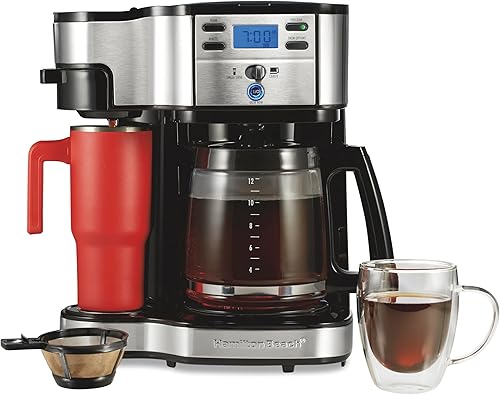
Programmable drip machines typically run between 900 and 1,200 watts and include a heated plate to keep the carafe warm after brewing. A thermal carafe, common on higher-end programmable models, keeps coffee hot without a heating plate, which reduces the risk of scorching. Manual French press and pour over setups draw no wattage on their own since you heat the water separately. The Hamilton Beach 49980R, a fully automatic 950-watt drip machine with over 53,000 reviews, reflects the typical wattage range for programmable home machines. Understanding your carafe type matters: glass carafes on a heated plate work fine if you drink coffee within 30 to 45 minutes, while a thermal carafe preserves flavor longer.
Cleaning and Descaling
Both types of machines require regular cleaning, but the process differs. Programmable drip machines have water reservoirs, internal tubing, and heating elements that need periodic descaling to remove mineral buildup, especially in hard-water households. Most programmable machines include a descale indicator or a cleaning cycle you can run with a descaling solution. Manual pour over equipment like glass drippers and gooseneck kettles are simpler to clean because there are fewer internal parts. French press setups require thorough rinsing of the mesh filter after every use. Whichever type you choose, skipping regular cleaning shortens the life of the machine and affects taste.
Common mistakes to avoid
- Buying a programmable machine but never using the timer, which gives you all the complexity with none of the convenience.
- Choosing a pour over setup expecting hands-off convenience, then giving up on it because it requires focused attention every morning.
- Ignoring capacity when comparing types: most pour over and French press setups max out at 4 cups, which does not work for households brewing for multiple people.
- Assuming manual means better quality automatically, without accounting for the skill and consistency required to replicate a good brew each time.
- Skipping descaling on a programmable drip machine until it brews lukewarm coffee or slows down significantly.
- Buying a programmable machine with a glass carafe but leaving coffee on the warming plate for over an hour, which scorches the brew.
Frequently asked questions
Is a programmable coffee maker worth it?
Yes, if you want coffee ready before you get out of bed or need to brew on a consistent schedule. If you are home when you brew and do not mind pressing a button, a non-programmable machine works just as well.
Does a manual coffee maker make better coffee than a programmable one?
Not automatically. A manual pour over can produce a better cup in skilled hands because you control the water temperature and pour rate precisely. But a quality programmable drip machine brews consistently good coffee with no effort, which for most people is the better daily trade-off.
What is the difference between manual and fully automatic drip?
A manual drip machine requires you to press start each time and offers no scheduling. A fully automatic drip machine handles the full brew cycle and typically includes a programmable timer so you can set it to brew at a specific time without being in the room.
How many watts does a typical programmable coffee maker use?
Most home programmable drip machines draw between 900 and 1,200 watts during brewing. The heating plate that keeps the carafe warm draws less power continuously after the brew cycle finishes.
Can I use a single serve or K-Cup machine on a timer?
Most K-Cup single serve brewers are not programmable in the traditional sense because they brew one cup at a time on demand. They heat up quickly, so the convenience argument for a timer is less compelling than with a full-carafe drip machine.